
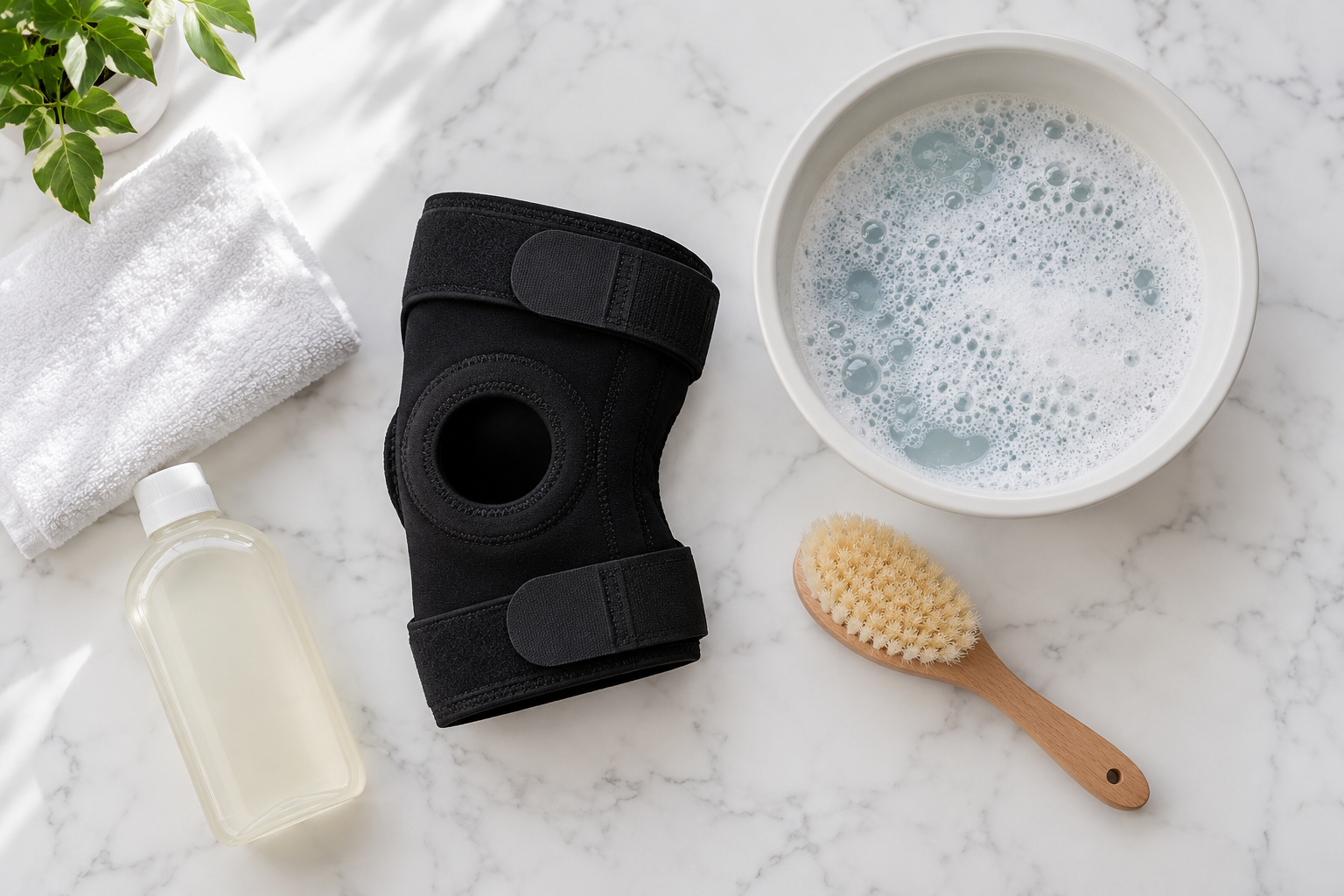
If you wear a knee, ankle, wrist, or back brace regularly, you already know the problem nobody warns you about: after a few weeks, it starts to smell. That funk isn’t dirt. It’s bacteria feeding on trapped sweat and skin oils, and left alone it does more than offend your nose. It breaks down the neoprene, loosens the fit, and can irritate your skin.
The good news is that keeping a brace fresh takes about two minutes a day and a proper wash every couple of weeks. Here’s how to do both without wrecking the material.
Why braces smell in the first place
A brace sits tight against your skin, often for hours, in exactly the conditions bacteria love: warm, damp, and dark. Sweat itself is nearly odorless. The smell comes from bacteria breaking it down, and the neoprene and foam most braces are made from soak up that moisture and hold onto it.
That means two things. First, the smell is a hygiene issue, not a quality issue, so a cheap brace and an expensive one both need the same care. Second, if you only wash the brace occasionally, you’re letting bacteria multiply for days between cleans. The fix is a daily habit plus a deeper wash on a schedule.
The daily two-minute habit
This is the step most people skip, and it’s the one that matters most.
After you take the brace off, wipe down the inside with a cloth dampened in cool water and a drop of mild soap. You’re removing the fresh layer of sweat and oil before bacteria can work on it. Then hang the brace somewhere airy to dry completely, not crumpled in a gym bag or a drawer. A brace that goes back on damp is a brace that will smell by the end of the week.
If you sweat heavily or wear the brace for sport, keep a second one and alternate them, so each has a full day to dry out between uses.
The proper wash, every one to two weeks
For the deeper clean, hand washing beats the machine almost every time.
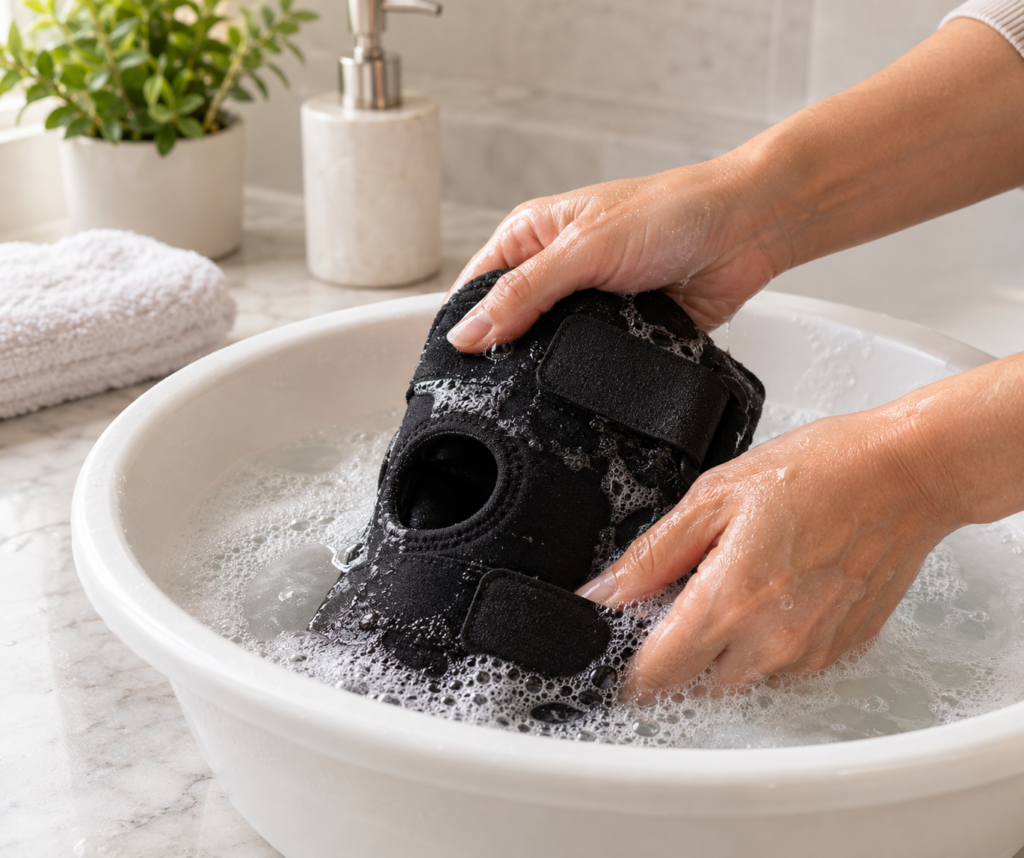
Fill a sink or basin with lukewarm water, not hot. Heat is the enemy of neoprene: it breaks down the elasticity that gives the brace its support. Add a small amount of mild, fragrance-free detergent and swirl it in. Fasten any Velcro straps first so they don’t snag or curl.
Submerge the brace and gently work the soapy water through it with your hands, paying attention to the inside surface where sweat collects. Skip stiff brushes and hard scrubbing, which fray the material. Let it soak for about ten minutes.
Rinse thoroughly until the water runs clear. Leftover detergent stiffens the fabric and irritates skin, so rinse more than you think you need to. Press the water out gently with a towel. Never wring or twist a brace, which distorts its shape.
Finally, lay it flat or hang it to air dry, away from radiators, dryers, and direct sun. All three cause shrinking and warping.
When odor won’t budge
If the smell lingers after a normal wash, add a natural deodorizer to your soak. A few tablespoons of baking soda or a splash of white vinegar in the water will neutralize odor that detergent alone can’t. Rinse well afterward, then air dry as usual. Avoid bleach and fabric softener entirely. Both degrade the elastic fibers and can leave residue that irritates skin.
The things that quietly ruin a brace
A few habits shorten a brace’s life without you noticing:
- Putting it on over fresh lotion or sunscreen. Let those absorb fully first, or the residue builds up on the neoprene and traps odor.
- Machine drying it, even once. The heat is enough to make the material brittle.
- Ignoring the Velcro. Straps stop gripping when the hooks clog with lint. Run a toothbrush or a fine comb across them to clear the fibers and restore the hold.
- Storing it damp. This is how mildew starts, and mildew smell rarely comes out.
The short version
Wipe the inside daily, hand wash every week or two in cool water with mild soap, rinse well, and always air dry. Skip heat, bleach, and softener. Do that, and your brace stays fresh, keeps its shape, and lasts far longer than one that only gets washed when it starts to smell.
This article is for general information only and is not medical advice. Always follow the care instructions that came with your specific brace, and consult a healthcare professional about how and how long to wear it for your condition.